 By
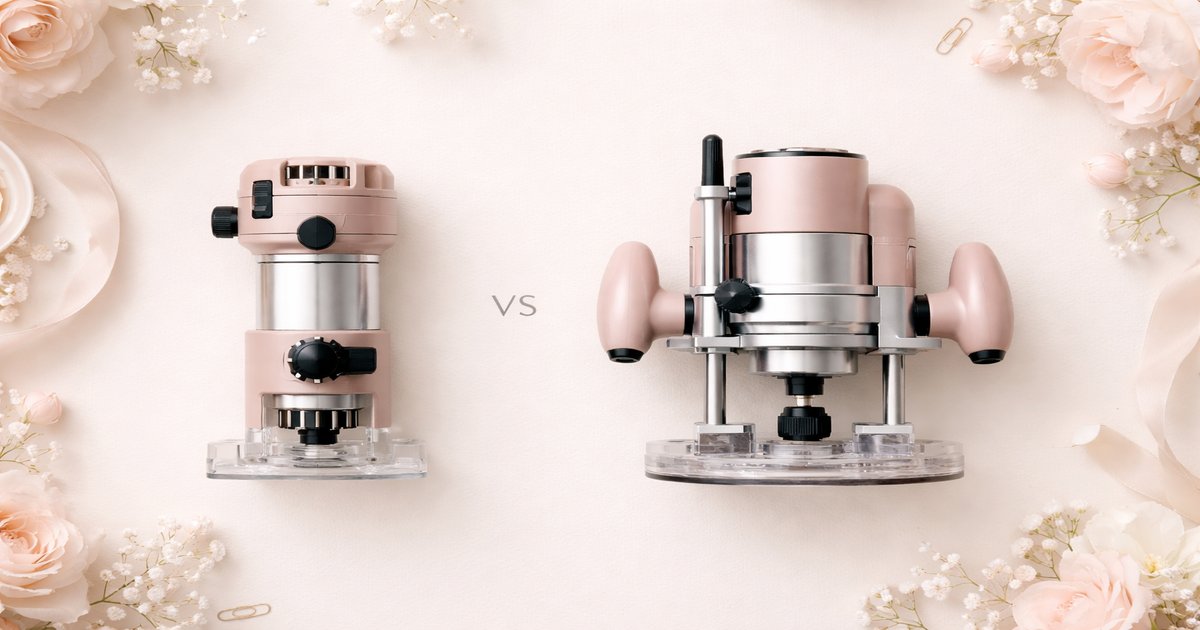
By You’ve just started your woodworking journey, and you’re knee-deep in projects that demand precision and finesse. You know you need to shape edges and create decorative elements, but should you grab a laminate trimmer or a router? Let’s dive into the nitty-gritty of these essential tools.
| Feature | Laminate Trimmer | Router |
|---|---|---|
| Power Output | 1 HP | 1.75 – 3.25 HP |
| Weight | 3 lbs | 5 – 9 lbs |
| Adjustable Speed | ✗ | ✓ |
| Base Types | Fixed | Fixed, Plunge |
| Precision | High | Moderate to High |
| Best for | Edge Trimming | All-around Routing |
✅ laminate trimmer Pros
- Lightweight and easy to handle
- Perfect for detailed edge work
- Cost-effective for specific tasks
❌ laminate trimmer Cons
- Limited power capacity
- Not suitable for heavy-duty tasks
✅ router Pros
- Versatile with multiple base options
- Powerful, suitable for heavy tasks
- Adjustable speed for various materials
❌ router Cons
- Heavier and can be cumbersome
- Higher price point
Performance
When it comes to performance, routers are the heavy hitters in the workshop. With power output ranging from 1.75 to 3.25 HP, they tackle a wide range of tasks, from cutting grooves to shaping edges on hardwood. The adjustable speed settings allow you to adapt to different materials, a significant plus if you’re working with both softwoods and hardwoods. Laminate trimmers, on the other hand, are more specialized. Their 1 HP output is ideal for precision edge trimming but falls short for more intensive tasks. If you’re focusing on edge work, the trimmer’s high precision might just do the job.
Build Quality
In terms of build quality, routers often come with a robust design that can withstand the rigors of heavy use. They feel solid in hand, which adds to their stability during operations. Laminate trimmers, being lightweight and compact, offer less in terms of build robustness. They excel in portability and ease of handling, but that can sometimes come at the cost of durability if heavily used. If you’re jumping from job to job, the trimmer’s portability is a win. However, for a stationary setup in your workshop, the router’s sturdiness is unparalleled.
Value for Money
Value isn’t just about the initial price tag. For a hobbyist or DIY enthusiast, a laminate trimmer offers great value for money with its specialized use and lower cost. You’re not paying for extra features you won’t use. Routers, while pricier, offer a higher return on investment through versatility and power. If your projects are diverse and require different routing tasks, the router’s versatility could save you from needing multiple tools. But if you have specific needs like edge trimming, the trimmer is a smart, cost-effective choice.
Many overlook the noise levels of these tools. Routers can be significantly louder, which might not bode well if you’re working in a shared space. Also, routers can be intimidating for beginners due to their power and bulk. Laminate trimmers might struggle with depth adjustments, especially if you’re switching between different thicknesses of materials frequently.
Our Final Verdict: Which One Should You Buy?
For precision edge work and portability, especially in a hobbyist setting, go for the laminate trimmer. It’s lightweight and doesn’t break the bank. However, if you’re a professional or an avid DIYer tackling a wide range of tasks, the router is your best bet. Its versatility and power will handle everything you throw its way, making it a solid investment.
Can a laminate trimmer handle hardwood?
Laminate trimmers are generally not powerful enough for hardwood. They’re best used on softer materials and edges.
Is a router too heavy for handheld use?
While routers are heavier than trimmers, many models are designed with ergonomic handles to make handheld use more comfortable.
Do I need both a laminate trimmer and a router?
It depends on your projects. If you’re into detailed edge work, a trimmer is great. For broader applications, a router is more versatile. Owning both could be beneficial for extensive woodworking projects.